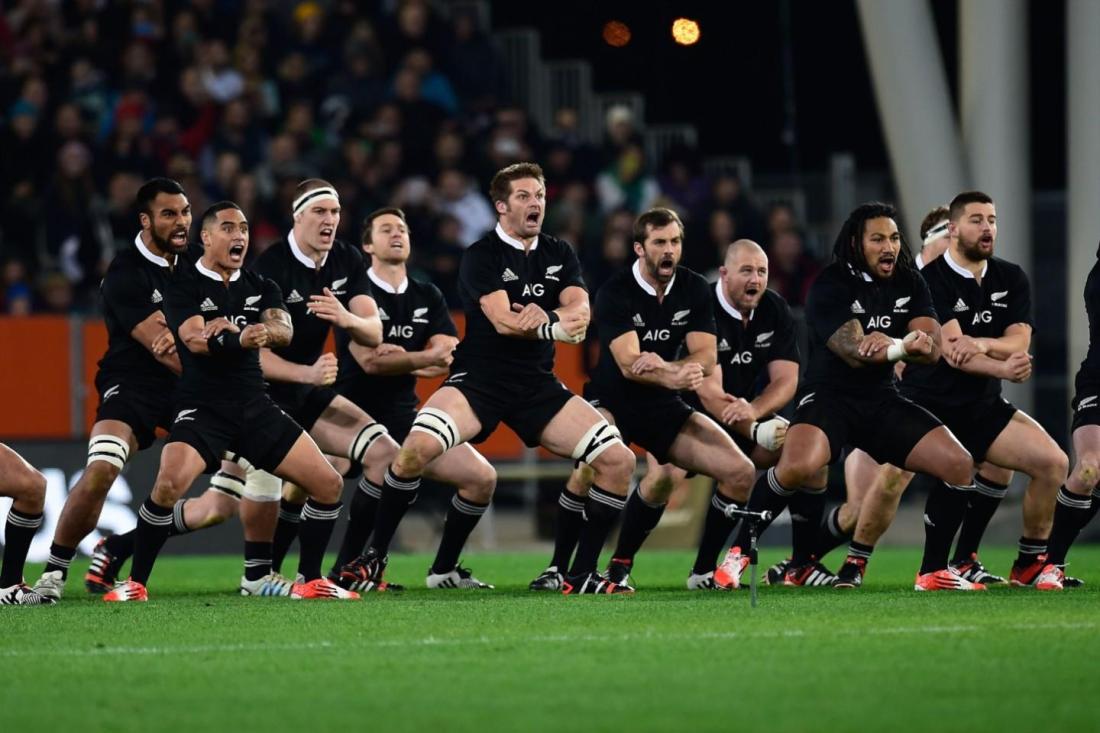
Rugby Union is a popular field sport played worldwide (Nicholas, 1997). There are 92 Unions within the International Rugby board. The game consists of two 40 minute halves. It is a high intensity intermittent sport with periods that require maximal strength and power as well as low intensity aerobic activities (Cunniffe, 2009). Periods of high intensity exercise last between 5-15 seconds while low intensity exercise can last for up to 40 seconds (Maud, 1984). A team consist of 15 players, 8 forwards and 7 backs. The average amount of time the ball is in play for is typically 30 mins. Players wearing numbers 1 to 8 are deemed the ball winners while players wearing the numbers 9 to 15 are deemed the ball carriers. Each player number also has their own varying role in the team, and experience different workloads and physiological characteristics (Quarrie, 2002). For example, forwards tend to be at least over 20 kilograms heavier than backs (Duthie, 2003). This is due to forwards absorbing more for collisional forces than backs. Backs also prefer to be lighter so they can use their speed more efficiently when running at the defence with the ball in hand.
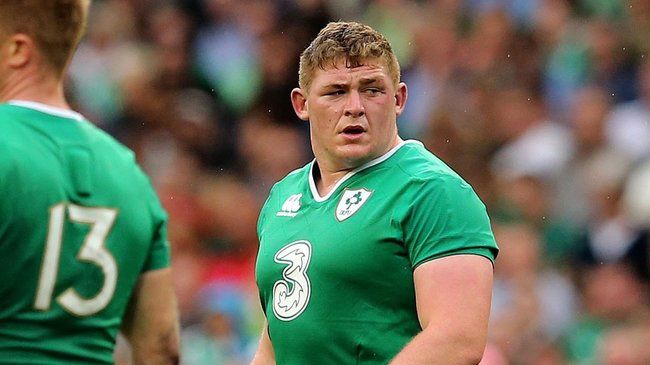
The programme shown on this website is too develop strength and power for a prop. Strength is a muscles maximum force at a certain speed. The product of strength and speed is power (Knuttgen, 1987). Props require large amounts of strength and power to compete in rucks, scrums and mauls. The mean pack force ranges from 6210N to 9090N (Quarrie, 2000). Props require strength in contact situations as well as isometric strength, especially leg strength when performing scrums. Leg power is useful for props during line outs and scrums (Nicholas, 1997). Props require upper body strength and muscle to withstand the high impacts of gameplay. The best way for props tom develop the power necessary for competition is by lifting maximal and sub maximal weights in a gym based setting.
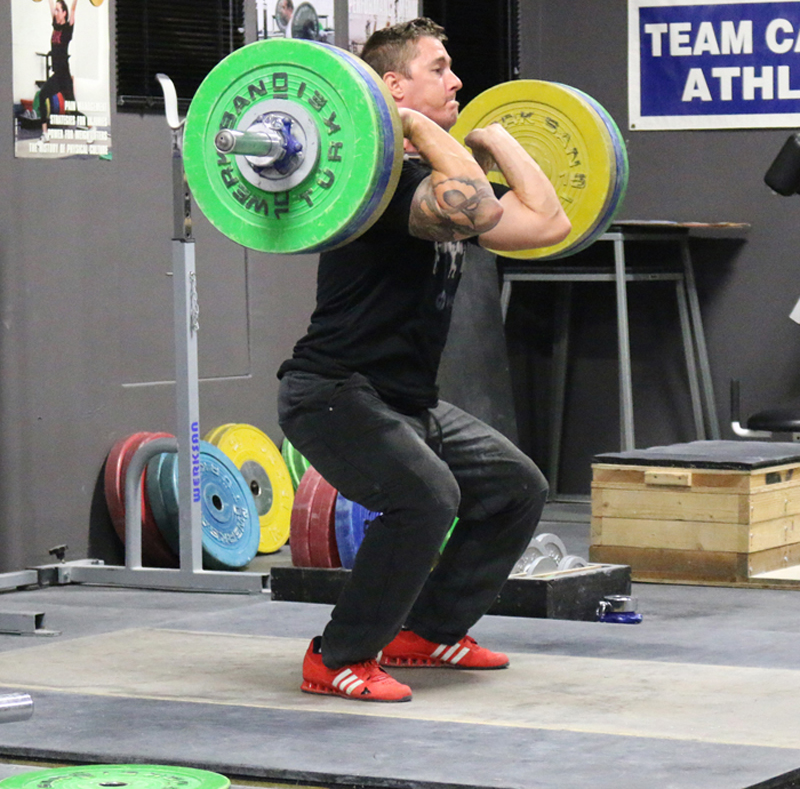
The first component of strength we looked to develop in this programme is explosive strength. This is also known as power training. This involves moving heavy weights as fast as possible. Power training is arguably the most valuable and the cornerstone for all athletic sports. This is true for rugby as many players spend most of the game displacing an object as fast as possible. The exercise we decided to use for this is the hang power clean. This us undertaken through velocity and acceleration of an external resistance (Brannigan, 2016). 4 sets of 3 reps of this exercise was chosen to train power development. This replicates many of the demands of a prop. 80% of the athlete’s one rep max was chosen to make the lift challenging but to ensure the weight still moved fast. This exercise is also beneficial as it utilised high concentric force and type II muscle fibres. The power clean is also utilised by strength and conditioning practitioners because of its effectiveness of at developing triple extension at the ankle, knee and hip (Suchomel, 2014). Triple extension forms the basis of all athletic movements.
The next exercise in the programme is a box squat. 3 sets of 5 reps at between 80% and 85% of 1RM is chosen to work on strength development. A box squat is chosen over a back squat to standardise the depth and technique. Research has shown little differences in the kinematic and kinetic variables of the squat and box squat (McBride, 2010). The squat also is correlated with sprint speed in rugby players. It also replicates the positions of the scrum and when they pick and carry. The squat builds low and core strength through having to brace with heavy loads to keep the torso in line and in a safe position. The squat is also a primal movement pattern that is important to learn for overall health and well-being.
The bilateral lower limb exercise is followed by a unilateral hinge which is the Single Leg Romanian Deadlift. The athlete will perform 3 sets of 8 reps of this exercise with a 4 second eccentric. Single limb work is important to negate any asymmetry’s the athlete may have. Studies have found that unilateral training has been linked to improve running mechanics (Lockie, 2014). Hamstrings strains are the most prevalent injuries in rugby union. This is due to the workload the hamstring goes through, especially in eccentric actions like sprinting. By adding single leg eccentric hamstring work, injuries have been shown to decrease (Bourne, 2015).
The next section of this program is the upper body component. It consists of an upper body push and an upper body pull. The push exercise is the bench press and the pull exercise is the bench pull. The set and rep range for these exercises are 4 sets of 6 reps. This is the high end of strength development to introduce some hypertrophy as well. These are crucial aspects of strength for props due to the impact they receive during games. Forwards need a higher body fat percentage and more lean upper body mass than backs to prevent injuries while in scrums, rucks and mauls (Nicholas, 1997). Creating more upper body mass creates protection for the athlete, especially around often injured structures such as the shoulders. Training a push and a pull simultaneously ensures that there is no strength imbalances in pushing and pulling. Training pushing and pulling movements will also aid in building grip strength. Grip strength is needed when grappling other players and rucking. General upper body strength is also useful to help the prop grapple and hand off players when they are running with the ball. There will be three minutes of rests between sets. The three minutes of rest will restore the strength levels sufficiently while also allowing for some fatigue to incur to elicit the hypertrophy response that we are looking for.
| Order | Exercise | Sets | Reps | Tempo | Intensity | Rest |
| A | Hang Power Clean | 4 | 3 | 80% | 3-5 mins | |
| B | Box Squat | 3 | 5 | 2x1x1x1 | 80%/85% | 3-5mins |
| C | SL RDL | 3 | 8 | 4x2x1x1 | 1-2mins | |
| D1 | Bench Press | 4 | 6 | 2x1x1x1 | 80% | 3-5mins |
| D2 | Bench Pull | 4 | 6 | 2x1x1x1 | 80% | 3-5mins |
Seen as there is both a lower body and upper body component to this program, I have decided to use to two suitable tests to track the athlete’s progress. My first test is the squat jump. Jump tests have been widely researched as a tool to record an athlete’s process. This is due to jumping being a complex motor coordination movement that requires the athlete to produce force quickly (Markovic, 2004). There has also been many studies that have looked at the reliability and test – retest reliability of jumps.
One of the variables of jumps that are often studied when it comes to its ability to predict strength development is peak power. Power is often expresses as instantaneous value of displacement. Peak power is the highest instantaneous value (Carlock, 2004). This variable is viewed as the most significant when it comes to its association with explosive sports similar to weightlifting (Garhammer, 1993). There are many ways to calculate this variable. The most popular way to calculate it is with the use of equipment like force platforms or GymAware. However this may not be available to all athletes and coaches. This is why I have chosen to use the squat jump.
The reason why the squat jump is chosen to assess peak power is due to its mechanical similarities to the box squat and hang power clean. The triple extension and movement pattern is similar to that seen in our two primary lower body lifts. As a result, the athlete has little interference to his training and recovery as he does not have to perform 1 rep maxes which can be fatiguing and have a high risk factor (Carlock, 2004). As a result, the player will be able to continue his training load without interference. By testing this way it is also possible to measure the potential of the prop and monitor any fluctuations due to periodization. This is also helpful for tracking performance. Jump tests such as this are also beneficial for monitoring fatigue. Drops in peak force have been shown to correlate to neuromuscular fatigue, which is a lot harder to detect using repetition max tests.
To measure the jump a Kinematic Measurement System will be used. The jump is performed with hands on hips to focus purely on the explosiveness of the legs. Testing will occur after an appropriate warm up on a training day each week to track progress. The athlete will start the jump with a knee angle of approximately 90 degrees for three seconds before commencing the jump. A set of three practice jumps will be performed. This will be followed by three sets of three jumps that will be measured. There will be two minutes of rest between sets to avoid any accumulation of fatigue. Jump height was recorded using the equation (g x flight time x flight time)/8. Peak power was than recorded by (60.7) x (jump height, cm) + 45.3 x body mass – 2,055.
Testing in this way has be proven to be reliable in determining lifting performance. Relationships have been shown to be strong between peak power and lifting performance.
For the upper body lifts, I have opted to use 3 repetition maximum test of the bench press and the bench pull. This was helpful because the prop was used to the format of the lifts due to their inclusion in his training program. The prop was asked to perform heavier loads each sets with 3-5 minutes of rest between each set (Speranza, 2015). I supervised and guided the athlete through each set and helped him to determine what loads to lift. He then reached a load he wished to attempt for his 3 rep max. I spotted the lift from behind the athlete during the bench press and also assisted by giving a powerlifting style lift off of the rack. The bench pull followed the same protocol as the bench press. The tests are to be performed once every four weeks after an appropriate warm up pre training session.
I chose the 3RM over other equipment based tests due to the equipment available. Studies have also proven that repetition maximum tests are more transferable to sporting situations. It has also been proven that Repetition maximum tests correlate strongly with strength testing equipment such as dynometer. This is helpful strength and conditioning coaches and athletes who might not have access to such equipment. Testing the muscles strength in this way has been shown to correlate strongly with performance (Lex, 2008).
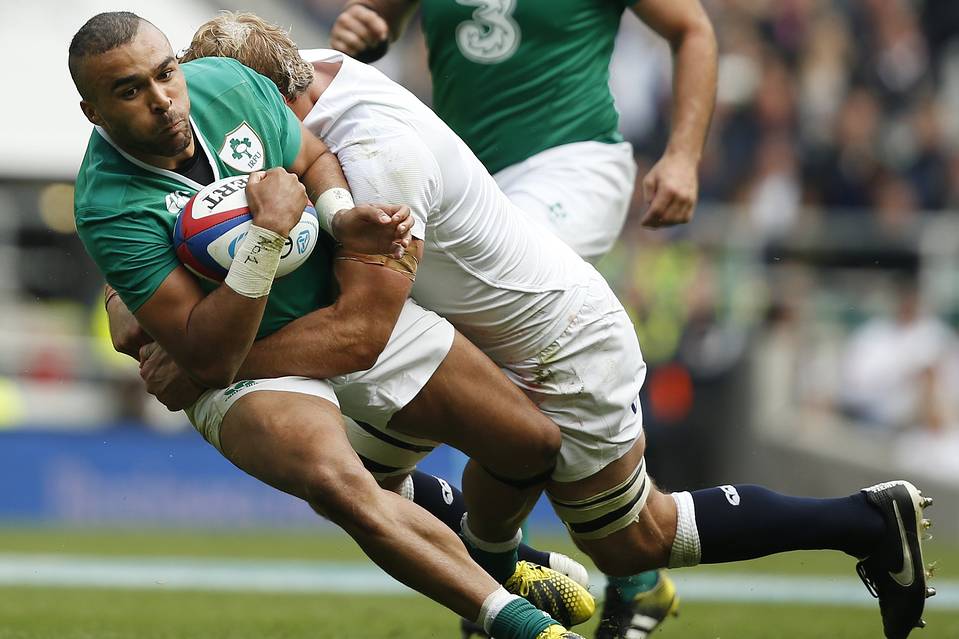
Another reason why it is important to measure a rugby union player’s upper body strength is due to tackling performance. Studies have shown that stronger players perform better in the tackle. This is imperative because of the collisional nature of the game. This is especially true for props. Forwards on average make 39 tackles per game (Gissane, 2001). Stronger players have been shown to tolerate these high impacts better. This is beneficial as 77.2% of all injuries happen during the tackle (Speranza, 2015).
Reference list
Brannigan, Joel. (2016). Strength and Conditioning for Rugby Union. The Crowood Press, 9781785000843, 1785000845
Bourne, Matthew N. (2015). Eccentric Knee Flexor Strength and Risk of Hamstring Injuries in Rugby Union A Prospective Study. The American journal of sports medicine, Volume: 43 Issue: 11 Page: 2663-2670
Carlock, JM. (2004). The relationship between vertical jump power estimates and weightlifting ability: a field-test approach. Journal of strength and conditioning research, Volume: 18 Issue: 3 Page: 534
Cunniffe, Brian. (2009). An evaluation of the physiological demands of elite rugby union using Global Positioning System tracking software. Journal of strength and conditioning research, Volume: 23 Issue: 4 Page: 1195-1203
Duthie, Grant. Pyne, David. Hooper, Sue. (2003). Applied Physiology and Game Analysis of Rugby Union. Sports Med 2003; 33 (13): 973-991
Garhammer, I. (1993). A Review of power output studies of olympic and powerlifting: methodology, performance. Journal of strength and conditioning research, Volume: 7 Issue: 2 Page: 76
Gissane, C. (2001). An operational model to investigate contact sports injuries. Medicine and science in sports and exercise. Volume: 33 Issue: 12 Page: 1999
Knuttgen, HG. (1987). Terminology and measurement in exercise performance. Journal of strength and conditioning research, Volume: 1 Issue: 1 Page: 1
Lockie, Robert G. (2014). Relationship Between Unilateral Jumping Ability and Asymmetry on Multidirectional Speed in Team-Sport Athletes. Journal of strength and conditioning research, Volume: 28 Issue: 12 Page: 3557-3566
Maud, Peter J. (1984). The US National Rugby Team: A Physiological and Anthropometric Assessment. The Physician and sports medicine, Volume: 12 Issue: 9 Page: 86-99
McBride, Jeffrey M. Blow, Daniel. Kirby, Tyler J. Haines, Tracie L. Dayne, Andrea M. Triplett, N Travis. Relationship Between Maximal Squat Strength and Five, Ten, and Forty Yard Sprint Times. National Strength and Conditioning Association, Volume 23(6), September 2009, pp 1633-1636
Nicholas, Ceri W. (1997). Anthropometric and Physiological Characteristics of Rugby Union Football Players. Sports medicine (Auckland), Volume: 23 Issue: 6 Page: 375-396
Quarrie, Kenneth L. Cantu, Robert C. Chalmers, David J. (2002). Rugby Union Injuries to the Cervical Spine and Spinal Cord. Sports Medicine, Volume 32, Issue 10, pp 633–653
Suchomel, Timothy J. (2014). Kinetic Comparison of the Power Development Between Power Clean Variations. Journal of strength and conditioning research, Volume: 28 Issue: 2 Page: 350-360
Speranza, Michael J.A. (2015). Muscular Strength and Power Correlates of Tackling Ability in Semiprofessional Rugby League Players. Journal of strength and conditioning research, Volume: 29 Issue: 8 Page: 2071-2078

 173704